Buyer Guides
MD2, Smooth Cayenne or Sugarloaf: choosing a Ghanaian pineapple variety
Compare MD2, Smooth Cayenne and Sugarloaf pineapple for export and processing buyers sourcing from Ghana, and match the right variety to your end use.
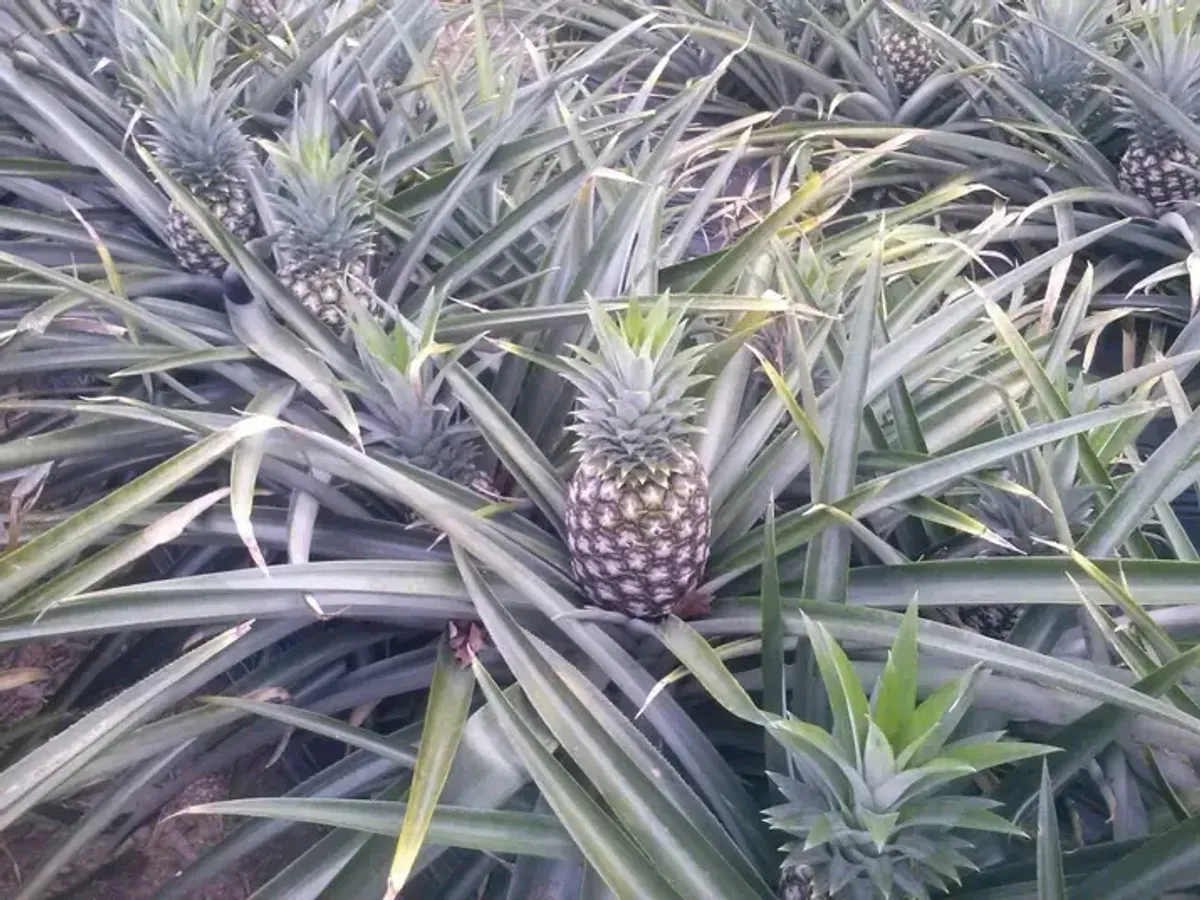
When buyers ask us which Ghanaian pineapple variety they should order, the honest answer is that the variety choice is really a use-case choice. There is no single “best” pineapple. There is the fruit that fits a supermarket shelf, the fruit that runs well through a juice line, and the fruit that regional and specialty customers ask for by name. Pick the end use first, and the variety usually picks itself.
This is a short comparison of the three types we quote most often, framed around what you plan to do with the fruit. For timing and lead times, see our pineapple harvest calendar.
MD2 (Golden Sweet): the retail standard
MD2, often sold as Golden Sweet, is the international retail benchmark. The fruit is uniform in size and shape, with sweet, golden flesh and a clean, consistent eating quality. It has a long shelf life and travels well by sea, which is exactly what a supermarket programme needs.
If you run a retail line, food service supply, or any programme that depends on year-round consistency, MD2 is usually the right call. Buyers who search for “MD2 vs Smooth Cayenne” are often really asking whether they need retail polish or processing volume, and MD2 is the answer when the fruit has to look and eat the same carton after carton. In general handling terms it is the most forgiving of the three for long-haul sea freight and organised retail.
Smooth Cayenne: built for processing
Smooth Cayenne is a robust, juicy fruit with a fuller, more acidic profile. That character is a strength rather than a drawback when the fruit is destined for a factory rather than a shelf. It suits juice, concentrate and dried applications, and it suits buyers who specifically want that brighter, more acidic taste.
If you process pineapple, or you blend for a particular flavour target, Smooth Cayenne is worth asking about. It handles well as a processing intake fruit and tends to give good juice character. For fresh retail it is less of a natural fit than MD2, so we usually steer it toward buyers whose end use is the line, not the display.
Sugarloaf pineapple in Ghana: the specialty pick
Sugarloaf is a prized local variety, and it is the one people fall in love with. The flesh is very sweet and low in acid, pale in colour, with a thin core that eaters enjoy. In West Africa it is a favourite, and it carries real pull in regional, specialty and diaspora markets where customers know it by name.
If you are asking about Sugarloaf pineapple in Ghana, plan a little differently. Supply is more seasonal than MD2, and volumes are tighter, so the smart move is to brief us further ahead and confirm your window early. When a buyer wants something distinctive for a specialty programme or a diaspora customer base, Sugarloaf is often the reason they call us in the first place.
How to choose by end use
The quickest way to land on a variety is to start from what happens to the fruit after it arrives.
- Retail programme. If the fruit goes on a shelf and has to be consistent, travel well and look the part, start with MD2. It is the safe, repeatable choice for organised retail and year-round supply.
- Processing. If the fruit feeds a juice, concentrate or drying line, Smooth Cayenne is usually the better match for both profile and value. Tell us your target so we quote the right intake fruit.
- Specialty and regional. If your customers ask for that very sweet, low-acid local taste, Sugarloaf is the draw. Just plan ahead, because it is more seasonal and volumes are tighter.
Many buyers end up ordering more than one variety for different lines, and that is completely normal. We are happy to quote a mix. Sizes and grades are confirmed at quote, so we would rather understand the use case than pin you to a spec too early. If mango is also on your list, our mango harvest calendar is a useful companion when you plan a combined produce programme.
What to tell us for a quote
To turn this into an accurate quote, the more you can share up front, the better. Useful details include:
- End use or named variety. Tell us the application (retail, processing, specialty) or name the variety directly if you already know it.
- Volume and frequency. One-off container or a repeating programme, and how often you need to be served.
- Grade, count and packaging preferences. Any size, count or packaging requirements you work to. If you are unsure, we will guide you, and sizes and grades are confirmed at quote.
- Destination port. Where the fruit needs to land.
- Arrival window. When you need it in market, so we can plan backwards from your date.
You can see the wider range on our produce page, and the harvest calendar covers how availability and lead times move through the year.
Not sure which variety fits your programme? Tell us your end use and destination and we’ll recommend one.