Buyer Guides
Octopus and squid grades explained: what to specify on your order
A buyer's guide to frozen octopus and squid from Ghana: octopus T-size grades, whole-round vs cleaned squid, IQF vs block freezing, and how to spec an order.
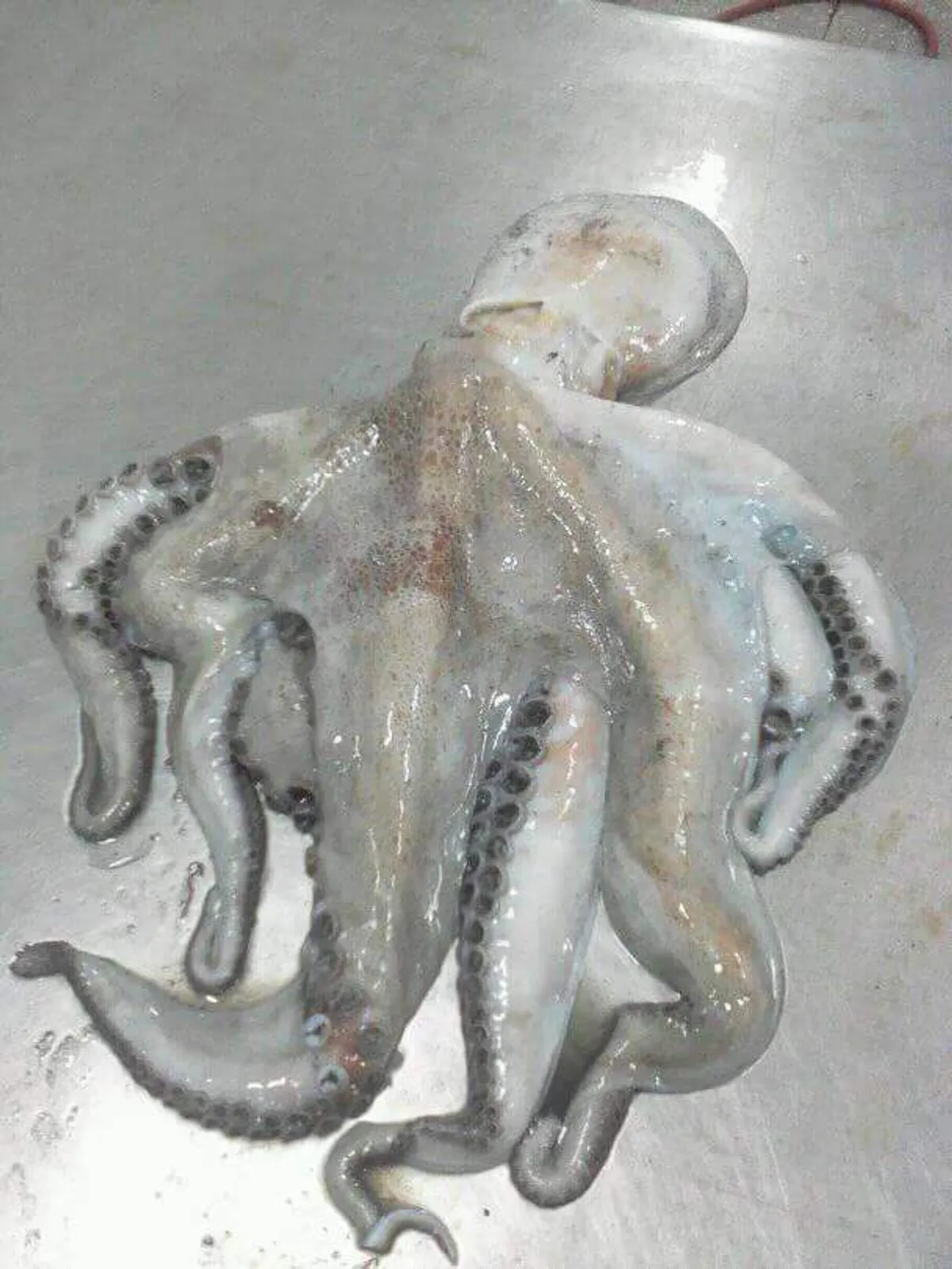
Octopus and squid are two of the species where buyers send us the most back-and-forth before an order is settled. The reason is simple: a lot rides on a few short words. The size grade, the way the animal is cleaned, and how it’s frozen all change what lands in your cold store. Get those right on your first message and the quote we send back will match what you actually want.
Here’s how we think about each choice, in plain trade terms, so you know what to ask for when you buy frozen octopus or squid from Ghana.
Octopus T-size grades
Octopus is graded by size, and the trade shorthand for that is the “T” scale, usually running from T1 through to T7. It’s standard industry vocabulary, not something we invented, so you’ll see the same T-numbers used across the sector.
The idea behind it is straightforward. A lower T number means larger individual octopus, so fewer, bigger pieces fill a carton. A higher T number means smaller octopus, so more pieces to reach the same carton weight. So when a buyer asks for octopus T2 T3, they’re asking for the larger end of the range, and a T6 or T7 request points at smaller animals. That’s the concept in a sentence: the T number tracks piece size, and piece size drives how many you get per box.
We won’t tie specific gram ranges to our stock in a blog post, because the grades that are actually available shift with the season and the landings. What frozen octopus size grades map to in weight, and the carton weights that go with them, is something we confirm on your spec sheet at quote. That way the band you agree to is the band that ships, not a figure that may not match this week’s catch. If octopus T-sizes are central to your business, say so in your first message and we’ll build the quote around the sizes you need.
Whole-round vs whole-cleaned squid
Squid comes in two main presentations, and the choice matters as much as size.
- Whole round. The squid as caught, whole and intact, nothing removed. It carries the highest headline weight per piece and hands your own team full control over how it’s processed downstream. It also means you’re shipping the parts you may later clean off.
- Whole cleaned. The squid is processed before freezing: the tube and tentacles are separated out and the inedible parts removed. It arrives ready to portion, which saves labour at your end and cuts the waste you carry in transit.
The trade-off runs one way. Cleaned squid arrives tidier and with less waste per kilo, but the extra handling is reflected in the price and the yield per piece. Whole round is often the pick for processors who want to clean in-house to their own standard, while whole cleaned suits buyers going straight to a kitchen or a counter with little further handling. If you’re not sure, tell us what happens to the squid after it reaches you and we’ll suggest the form that wastes the least on both sides.
IQF vs block freezing
The last big choice is how the octopus or squid is frozen for the journey.
- IQF (individually quick frozen). Each piece is frozen individually and fast, then packed loose. Because the pieces don’t set into one solid mass, you can pull exactly the quantity you need and leave the rest frozen. That gives you portion flexibility and suits buyers who draw stock down gradually.
- Block freezing. The pieces are frozen together in a solid block. A block is compact, it protects the product well in transit, and it stacks efficiently, which makes it a practical choice for volume orders and for buyers who are going to process the whole block at once anyway.
Neither is better in the abstract. The IQF vs block frozen decision comes down to how you’ll use the product. If you portion little and often, IQF earns its keep. If you buy in volume and run whole blocks through a line, block freezing packs more protection and product into the same space. For most export routes out of Ghana the cold chain does the heavy lifting either way, and we cover how that chain holds together in importing frozen fish from West Africa.
Grading by hand at Tema
None of this is decided from a desk. We grade by hand at the sorting tables at Tema, standing over the boards while the catch is still cool from the boats. Octopus gets sized by eye and feel, piece by piece, and squid gets sorted for condition before anything is routed to freezing. That’s the point of being there: the grade you eventually receive is chosen at the table, not guessed at later. There’s more of that morning in our field note from Tema Fishing Harbour.
How to specify your order
When you write to us, the clearer your spec, the faster and more accurate the quote. A good octopus or squid enquiry names six things:
- Species. Octopus or squid, so we know which grading language applies.
- Grade. For octopus, the T-size or sizes you want, for example T2 T3. For squid, whole round or whole cleaned.
- Freezing. IQF or block, depending on how you’ll portion and use it.
- Pack. Carton or bulk, and any packing preference. Carton weights are confirmed at quote.
- Incoterm. How you want to buy, for example FOB Tema if you run your own freight, or CIF to your named port if you’d rather we arrange it.
- Destination and volume. Your port and roughly how much, per shipment or per month.
None of this has to be locked down before you get in touch. A rough outline of the six points is enough for us to send something workable rather than a placeholder, and we set the grade bands and carton weights against the season’s landings once we see them. For the full range of species we handle alongside octopus and squid, see our seafood export page, and for another worked example of size grading, our guide to red snapper sizes and grades.
Know roughly what octopus or squid you need but not how to spec it? Send us your destination and volumes and we’ll shape the grade, cleaning and freezing into a clear quote.