Buyer Guides
How much fish fits in a 20ft reefer? Container planning for frozen seafood buyers
A practical look at 20ft reefer container capacity for frozen seafood: approximate usable volume and payload, why real loads depend on carton size and airflow, and how to plan your first container.
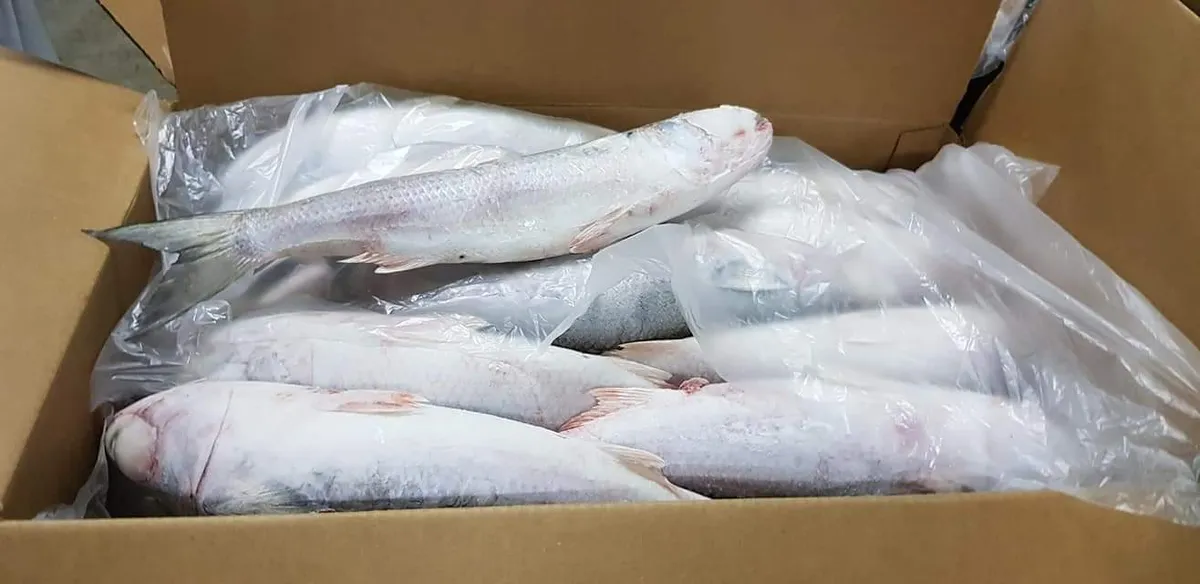
“How much fish fits in a 20ft reefer?” is one of the first questions a new seafood buyer asks, and it’s the right one. The container is the unit you plan around: your minimum order, your freight cost, and your cash all key off it. The honest answer is that a 20ft reefer holds a range, not a single fixed number, and the range depends on choices you and we make together.
Here’s how to think about it, so your first container is planned properly rather than guessed.
The 20ft reefer as a starting point
A reefer is a refrigerated shipping container with its own cooling unit, built to hold frozen or chilled cargo at a steady temperature across the whole sea journey. The 20ft reefer is the common entry size for a single-container seafood shipment.
As general industry context, a 20ft reefer offers roughly on the order of 28 to 29 cubic metres of usable internal volume, with the exact figure varying by container make and model. Its cargo payload is likewise capped by the container’s own rated limits. Treat both as approximate planning figures rather than promises: the real capacity of any given box is stamped on the container itself, and the real load depends on what you are shipping.
Note too that a reefer’s internal space is a little tighter than a plain dry box of the same outside size. The cooling unit and the insulated walls take up room, so you plan around the usable interior, not the outside dimensions.
Why the real load is never just one number
Two containers of the same species can carry noticeably different weights. A few reasons why:
- Carton size and pack. Frozen seafood ships in cartons, and carton dimensions decide how neatly the space fills. Cartons that stack cleanly waste less air; odd sizes leave gaps. The product inside, and the glaze or packaging around it, also change the weight per carton.
- Palletised or floor-loaded. Pallets make handling faster and protect the cartons, but the pallets themselves take up height and floor space. Floor loading, stacking cartons directly, fits more product in but is slower to work and handle. Which one suits you is a real planning choice.
- Airflow. A reefer cools by moving cold air around the cargo. The load has to be stacked so that air can circulate, which usually means not packing the container solid to the doors and roof. Respecting the airflow is part of protecting the cold chain, so a sensible load leaves room for it to work.
- Weight versus volume. Sometimes you fill the space before you hit the weight limit, sometimes the other way round. Dense product can max out the payload with the container still looking part empty. Light, bulky product fills the volume first. The binding limit decides your real load.
This is why a straight “kg of fish in a 20ft reefer” figure is misleading on its own. The useful number is the one we work out against your actual cartons and your chosen way of loading.
Mixed-species loads
You do not always have to fill a container with a single species. A mixed load, several species or grades in one 20ft reefer, is often how a buyer builds a first order or keeps a varied range moving. The planning is a little more involved, because different products come in different cartons and pack differently, but it’s very workable.
If a mixed load suits your market, tell us the species and rough split you want. For what we grade and ship, see our seafood export page, and for the whole picture across seafood and produce, the export overview.
Planning your first container with us
Our minimum order thinking starts at one 20ft reefer. That is the unit we plan around for a first shipment. From there, the exact load is something we work out with you rather than quote as a slogan:
- We look at the species and grades you want.
- We match those to realistic carton sizes and a loading method that protects the cold chain.
- We confirm the loading plan, the realistic quantity, and lead times at quote.
We don’t publish a single headline weight, because a number pulled out of the air helps nobody and can mislead you into over or under ordering. We’d rather give you a load plan that reflects your actual order. The cold chain and paperwork that sit around that load are covered in our guide on importing frozen fish from West Africa, and the choice of shipping terms in our guide on FOB Tema or CIF.
Planning your first 20ft reefer of frozen seafood? Tell us the species, grades and rough volumes you have in mind, and we will come back with a realistic loading plan and a quote. Ask for a loading plan.